Mellissa Ifill – February 2026
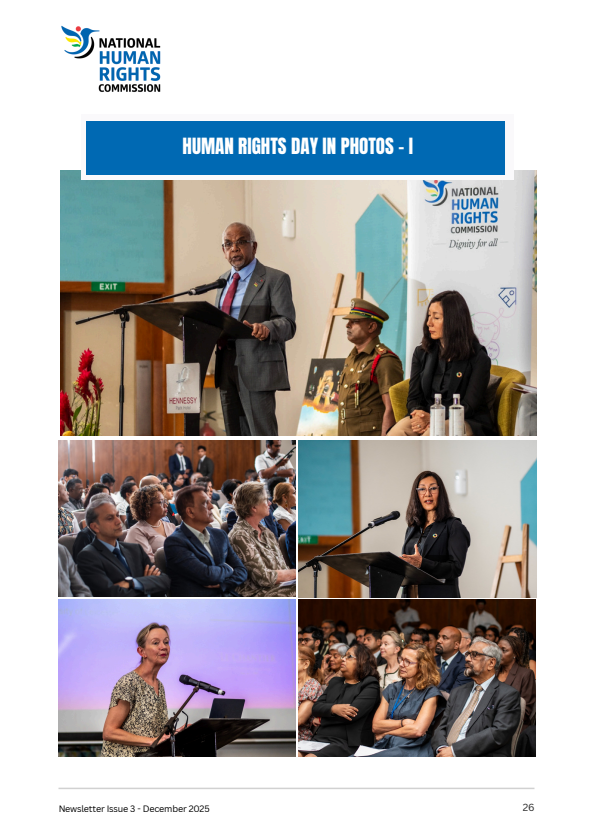
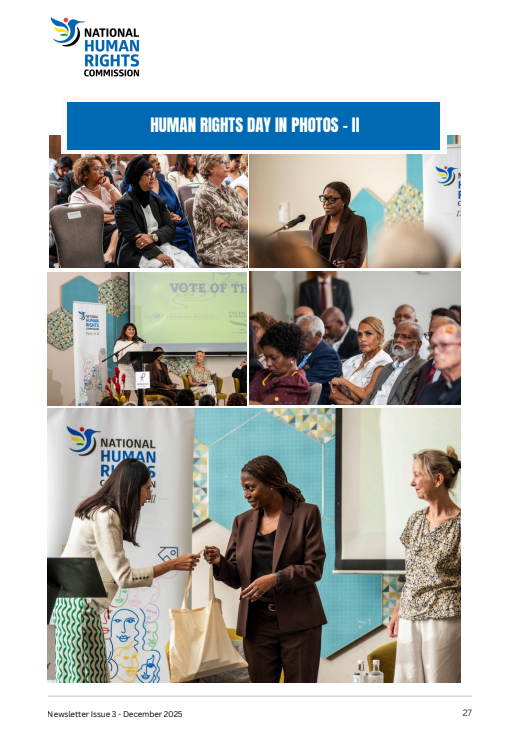
My visit to Mauritius in December 2025 at the kind invitation of the Mauritius Human Rights Commission in commemoration of International Human Rights Day, and secondarily to support Le Chantier in hosting a workshop for prison officers, revealed to me, striking and meaningful parallels between Guyana and Mauritius. The two countries have shared colonial legacies, diverse cultural landscapes, and common challenges in balancing development, justice, and human rights. These similarities made these engagements both intellectually stimulating and deeply motivating and I am eager to begin collaborative and comparative research on the Mauritius and Guyana Prison Services, particularly in the areas of institutional reform and human rights approaches to corrections.
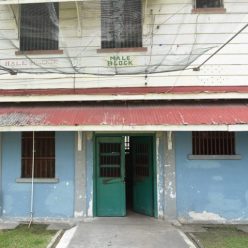
Both Guyana’s and Mauritius’ prison systems emerged as direct descendants of British colonial punitive regimes. Prisons had been historically designed to control labour, discipline dissent, and enforce a racialized social order that maintained colonial hierarchies. In this sense, incarceration functioned as a political tool as much as a legal one, shaping behaviour and managing populations deemed unruly or surplus within the colonial economy.
In Guyana, although independence brought constitutional change and a powerful rhetoric of dignity and equality, the deeper logics of punishment that were embedded in the prison system persisted. The physical infrastructure, administrative practices, and institutional culture continued to reflect colonial priorities long after the Union Jack was lowered.
Over subsequent decades, numerous national and international reports documented the human consequences of this inherited system. Prominent among them were extreme overcrowding that made meaningful rehabilitation virtually impossible, unsanitary and degrading living conditions that stripped both prisoners and officers of basic dignity, and chronic staff shortages that left facilities dangerously undermanned. Alongside these structural failures were credible and recurring allegations of brutality, reflecting not only individual misconduct but also the pressures of operating within an overstretched and under-resourced environment. The stark language used in these reports, describing prison conditions as “depressing,” “inhumane,” and “below international human rights standards,” captured the depth of the systemic failure.
Most of the attention and resources directed towards prison reform and enhancement over the decades was understandably directed towards addressing the desperate plight of prisoners as part of a rehabilitative agenda. Not much attention has been given to the experiences, wellbeing, and professional realities of prison officers, those whose roles sit at the frontline of any effort to build safer, more just, and more humane prison systems.
This neglect around the experiences of prison officers, leaves a huge gap in the literature, both historical and contemporary, and has become one of my main research focuses in this five year Wellcome Trust Project. My decision to focus my research on prison officers emerged from a fundamental shift in how I came to understand the prison system itself. For a long time, officers were most often positioned in public discourse, and even in my own early human rights work, as the main agents of brutality and institutional failure. However, my sustained engagement with the Guyana Prison Service, both as Chairperson of the Sentence Management Board between 2015-2020, and, through several collaborative prison research projects with the University of Leicester and the GPS between 2016 and 2023, revealed a far more complex and unsettling reality. Prison officers were enduring virtually the same hardships as the inmates they supervised. Their working conditions mirrored the neglect faced by prisoners. Overcrowded cell blocks were essentially overcrowded, inadequate and dangerous workspaces for prison officers. Officers lived and functioned in incredibly high-stress environments and faced deep stress and trauma from working in Guyana’s prisons, without meaningful, if any, access to mental health or psychosocial support. Fear shaped the experiences of both prisoners and prison officers daily. Both groups felt unseen, undervalued, and abandoned.
This realization reframed my entire approach, both as an academic and as an activist, to human rights in carceral spaces. I came to see officers not simply as enforcers of a flawed system, but also as individuals operating within, and often constrained by its deepest structural failures and who themselves constitute a vulnerable labour force within global capitalist structures.
Recognizing this parallel suffering led to a broader, more holistic understanding of reform. A prison is not just a site of confinement for those who are incarcerated. It is a complex ecosystem in which the wellbeing of one group is inseparably tied to the wellbeing of the other. When officers’ rights, safety, and professional development are neglected, the conditions for safeguarding prisoners’ rights are profoundly undermined. Lack of training weakens professional standards, chronic underpayment erodes morale, and unsafe or poorly designed environments make it difficult to act with patience and empathy under constant pressure. Trauma left unaddressed diminishes the capacity to manage crises, de-escalate conflict, and build the kinds of human relationships that make rehabilitation possible. In practical terms, a system that fails its officers cannot realistically be expected to deliver humane, rights-respecting treatment to those in its custody.
At the heart of this focus is a simple but profound reality: No one can pour from an empty cup. Sustainable and impactful reform in prisons must begin with acknowledging the rights and humanity of prison officers whose dignity, wellbeing, and working conditions matter. Consequently, supporting officers by advocating for fair compensation, professional training, mental health resources, and institutional respect is not a detour from a human rights agenda, it is its foundation. By centring officers in my research, I hope to advance an approach to prison reform that recognises their vital role in shaping daily prison life and treats their wellbeing as an indispensable aspect of the creation of more just and more humane carceral systems.
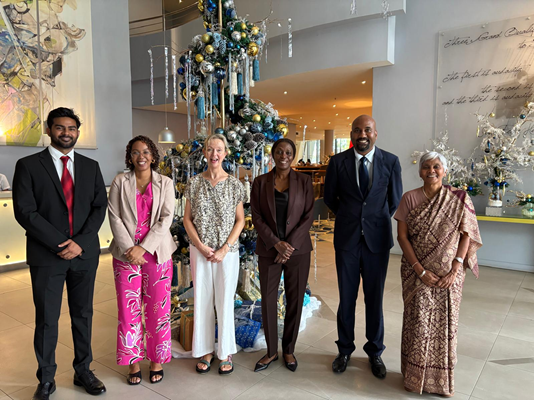
Part of the team at the Human Rights Commission event in Mauritius